
Preparing for residency, whether you’re waiting to apply, reapplying after an unsuccessful match, or simply taking a strategic gap year, can feel like a time of limbo. But it doesn’t have to be. One of the best ways to stay productive, earn money, and even enhance your CV is by pursuing paid non-clinical jobs that align with your strengths and goals.
Here’s how to find non-clinical opportunities that are flexible, rewarding, and sometimes even residency-application-friendly.
Clarify Your Goal: Income, Experience, or Both?
Before diving in, ask yourself:
-
Do I need a steady source of income?
-
Do I want to build transferable skills?
-
Do I want to stay connected to medicine without direct patient care?
Your answer will guide which non-clinical roles make the most sense.
Top Non-Clinical Jobs for Aspiring Residents
-
Medical Scribe (Remote or On-Site)
Perfect if you want to stay close to clinical workflows, EMR systems, and learn documentation standards. This is especially helpful if you’re preparing for U.S. clinical experience or interviews. -
Research Assistant (Paid or Volunteer)
If you’re hoping to strengthen your academic profile, research can add publications and U.S.-based work experience to your CV. -
Telemedicine Support Roles (not physician-led)
Some companies hire IMGs for intake, remote care coordination, or follow-ups under physician supervision. These roles provide exposure to U.S. healthcare workflows. -
Medical Writing & Editing
If you’re detail-oriented and fluent in medical language, consider freelance writing or editing for journals, health blogs, or educational platforms. Explore platforms like AMWA, Cactus Communications, Upwork, and Fiverr. -
Exam Tutoring (USMLE/NCLEX/MCAT)
If you’ve recently taken USMLE Step 1, Step 2 CK, or passed any part of the process, tutoring is flexible, pays well, and reinforces your knowledge. -
Clinical Trials Coordinator or Recruiter
Roles in pharma-sponsored studies often hire candidates with medical backgrounds to help with patient follow-up, data collection, or coordination. -
Health Tech Startups (Customer Success or Clinical Reviewer)
Startups value candidates with medical knowledge for content review, product testing, or clinical QA. These roles are often remote and offer skill development. -
Administrative or Quality Assurance Roles in Healthcare
Think compliance, credentialing, utilization review, or clinical quality analyst roles. Ideal for candidates with strong organizational skills.
Additional Roles to Explore;
-
Clinical Documentation Improvement (CDI) Specialist
CDI specialists ensure accurate documentation that reflects severity of illness and risk adjustment. Familiarity with ICD-10, DRGs, and EMR systems is helpful. -
Clinical Reviewer (Utilization Review or Insurance)
These roles involve reviewing charts for medical necessity and proper coding. Often remote and offered by payors or third-party vendors. -
Clinical Research Associate (CRA)
CRAs monitor clinical trial sites for protocol compliance. Requires GCP training and may involve travel or remote work. -
Behavioral Health Technician (BHT)
These positions involve supporting patients with mental health or substance use disorders. Work settings include detox units, psychiatric facilities, and rehab centers. -
Surgical Assistant (Non-licensed roles)
May include sterilization, patient prep, and OR support in outpatient centers. Role specifics vary by state and credentialing. -
Health Coach
Work with patients on lifestyle change, chronic disease management, and prevention. Roles are often remote with company-provided training. -
Personal Care Assistant or Medical Assistant
Found in geriatric homes, hospice, palliative centers, and addiction detox facilities. These roles offer patient exposure and flexible hours without requiring U.S. licensure.
What If You’ve Completed All the Prerequisites?
Whether you’ve completed all your USMLE Steps, are ECFMG certified, have finished U.S. clinical experience (USCE), and even secured the necessary work visa or authorization (such as a green card, EAD, or H-1B sponsorship), finding a meaningful position in the interim can still be valuable. This is especially true if:
-
You’re waiting for the next ERAS cycle
-
You’re planning to reapply after going unmatched
-
You want to stay engaged in the healthcare system while earning income to support you
In this case, non-clinical roles can reflect your continued commitment to medicine and personal growth.
Where to Find These Jobs
-
Job boards
Utilize platforms like Indeed at https://www.indeed.com/, ZipRecruiter, and LinkedIn at https://www.linkedin.com/, targeting keywords such as “remote medical reviewer,” “clinical documentation improvement specialist,” “clinical research associate,” “health coach,” “medical assistant,” or “clinical quality analyst.” -
Hospital websites or academic centers
-
Freelance platforms
Fiverr, Upwork, and Freelancer are ideal for medical writing, tutoring, editing, or tele-support. -
Niche boards
AMWA and ProBlogger for writing; ClinicalTrials.gov and TrialSites for research support; Chegg, Wyzant, and UWorld for tutoring. -
Company career pages
Explore openings on the websites of startups like HealthTap, Teladoc, Osmosis, and other medical education companies.
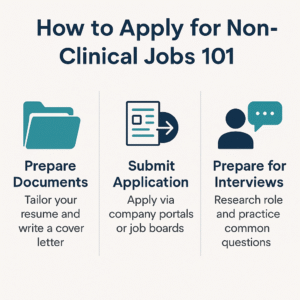
Polish Your Resume and Cover Letter for Non-Clinical Roles
Tailor your CV to highlight:
-
Transferable skills such as communication, organization, and writing
-
Certifications like HIPAA, GCP, medical writing, or clinical research
-
U.S. clinical experience or multilingual fluency
-
Tech proficiency including EMR systems, MS Office, or CRM tools
You don’t need a traditional U.S. work history to be competitive. Focus on value.
Be Strategic With Your Time
Non-clinical jobs should support, not sabotage, your main goal: matching into residency. Choose roles with:
-
Flexible schedules
-
Remote opportunities
-
Alignment with your specialty interest when possible
If you’re preparing for residency interviews, consider freelance or short-term jobs to avoid burnout.
Non-Clinical Roles Can Strengthen Your Application
Residency programs appreciate applicants who:
-
Use gap time wisely
-
Demonstrate initiative and maturity
-
Show skills in communication, technology, or leadership, even outside clinical settings
Mention relevant experiences in your personal statement or interviews, especially if they show growth and insight into U.S. healthcare.
Don’t let the waiting period before residency feel idle or frustrating. With the right non-clinical job, you can stay financially stable, expand your professional skills, and even improve your Match chances.
Whether it’s freelancing, medical writing, virtual scribing, research, behavioral health, or hospice care support, there are dozens of ways to stay productive on your residency journey.
Need help finding the right non-clinical job while preparing for residency, or need one-on-one physician mentorship?
👉 Follow us on Facebook here👉 https://www.facebook.com/people/MatchTheory/100089017007467/
👉 Schedule a free 15-minute consult here at Scheduling for help with your residency CV, personal statement, interview prep, or non-clinical job hunt.
👉 Explore our residency match application and mentorship services here Services